

What Personal Injury Marketing Costs
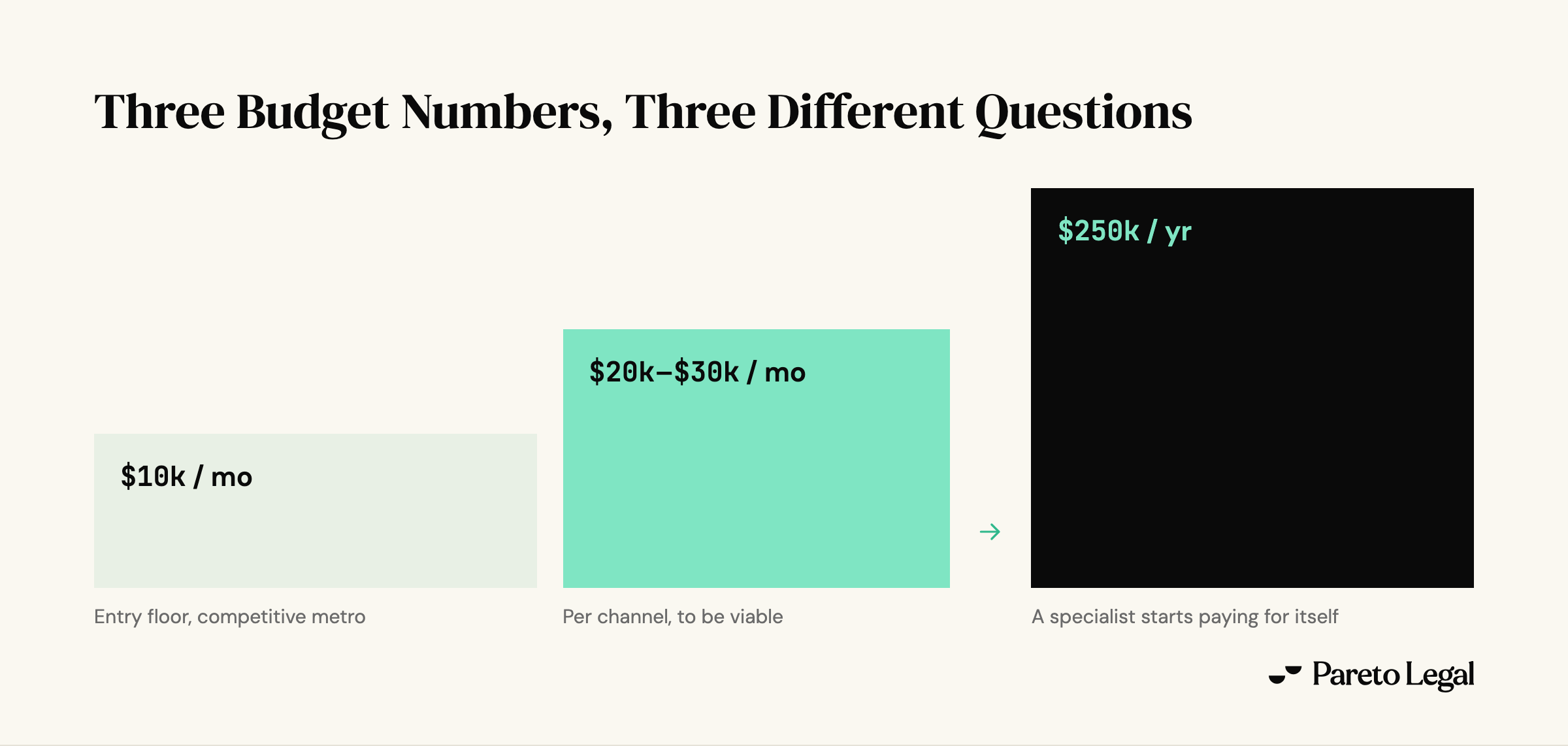
Personal injury marketing costs at least $10,000 a month to compete in most competitive metros, and roughly $20,000 to $30,000 a month per channel for a single channel to be viable. Those are two different numbers answering two different questions, which is where most budget arguments start.
The first is the floor for showing up at all. A firm with $15,000 a month will almost always do better concentrating on one or two case types in its strongest local area than spreading the same money across a whole market.
The second is per channel. It is the spend that produces enough conversion data to optimize a channel instead of guessing at it, so a firm running Google Ads, Local Services Ads and Meta at once is looking at a materially larger number than the floor.
A third threshold gets confused with both. Under about $20,000 a month a generalist marketing agency can usually handle your digital marketing.
Past roughly a quarter million dollars a year in digital advertising, the account gets complex enough that a legal-specialized agency tends to pay for itself. That is an agency-fit line rather than a spend floor.
Underneath the budget sit the click prices. Personal injury clicks run from about $70 to north of $300 in most markets.
Auto accident terms average around $240 in our managed accounts, slip and fall and premises around $127, trucking about $111, and medical malpractice closer to $60. We have seen trucking and wrongful death clicks pass $500.
Cost per lead lands around $400 across our accounts, from about $170 to over $800 depending on platform, geography and how many firms are fighting you locally.
Roughly 9% to 15% of injury leads become signed cases, as an aggregate rather than a promise for any one channel. That puts cost per signed case somewhere between about $1,500 and $5,000, with around $2,800 being a good result rather than a typical one.
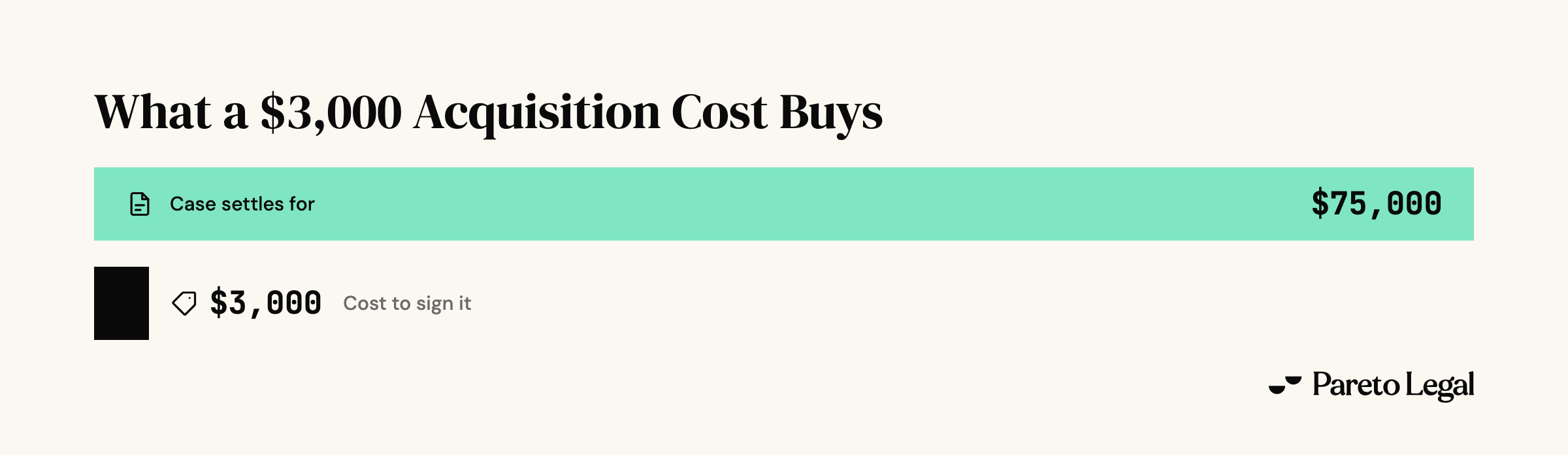
The test I use is simpler than any benchmark. Your cost per signed case should beat what you would pay for a referral fee, and with typical injury fees near $10,000 a case that puts a good acquisition cost around $3,000.
I would call a $3,000 acquisition cost on a personal injury case that settles for $75,000 an exceptional ROI.
Our ppc budget calculator will project how many signed cases and what ROI a given monthly spend should produce, and what law firms pay for paid search now gives you the wider market context. Everything we build through our law firm PPC services reports against signed cases rather than raw lead counts.
Advertising Strategies to Scale Injury Firms
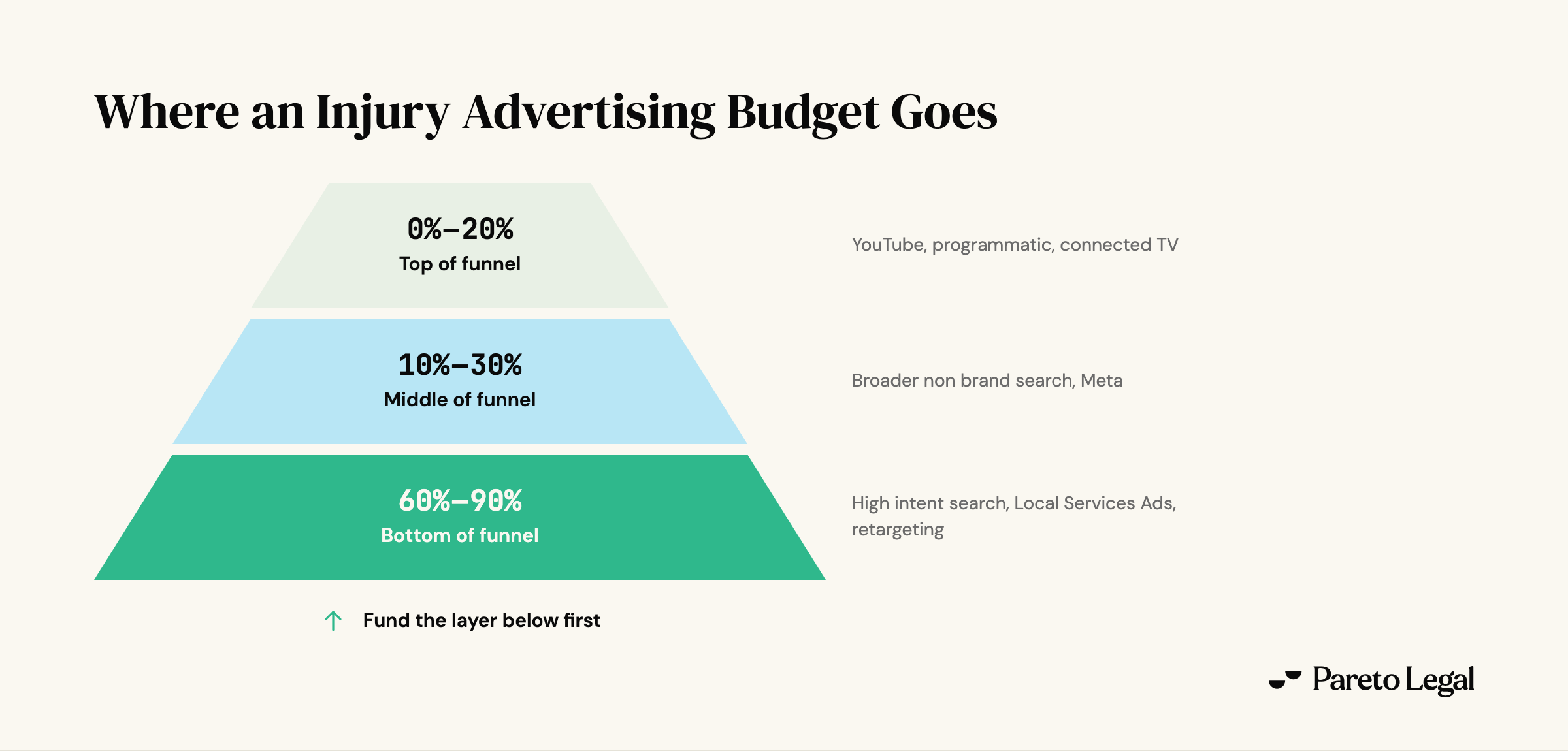
The ten personal injury marketing strategies below are ordered the way I fund them: Google Search and Local Services Ads first because they capture demand that already exists, then Meta and YouTube, then programmatic, geofencing, retargeting, traditional and TikTok as layers on top.
Budget follows the same order. Bottom of funnel takes 60% to 90%, middle of funnel 10% to 30%, and top of funnel 0% to 20%, and nothing moves up a layer until the layer below it is funded and profitable.
1. Google Search Ads
Google search ads reach a potential client in the hour they decide they need a personal injury lawyer, which is why the auction is the most expensive in law and why it stays first in the budget.
Search captures demand that already exists and creates none. If nobody in your market is searching this month, it cannot manufacture them.
I go deeper on how paid search works across any practice area, and on the full mechanics for injury firms specifically, including the account structure and negative keyword work that keeps a $250 click from being wasted.
2. Local Services Ads
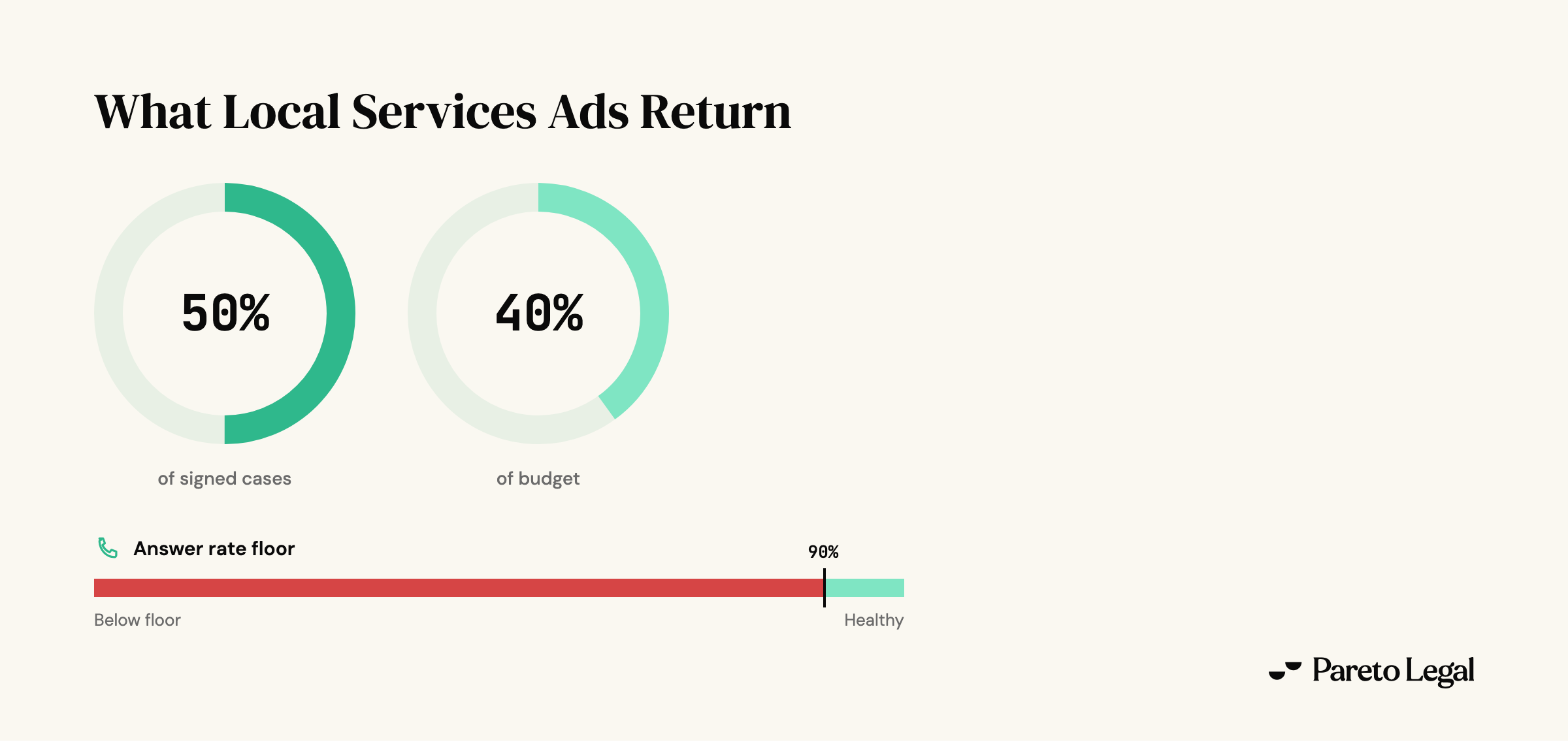
Local Services Ads sit above the standard ads, carry the Google Verified badge, and charge per lead rather than per click. In our managed accounts they tend to deliver around half of signed cases on about 40% of the budget.
The reason is lead quality. These are mostly phone calls from potential clients ready to talk to a personal injury attorney, and a call outperforms a form fill.
The channel lives or dies on your answer rate, and below roughly 90% you are quietly capping it.
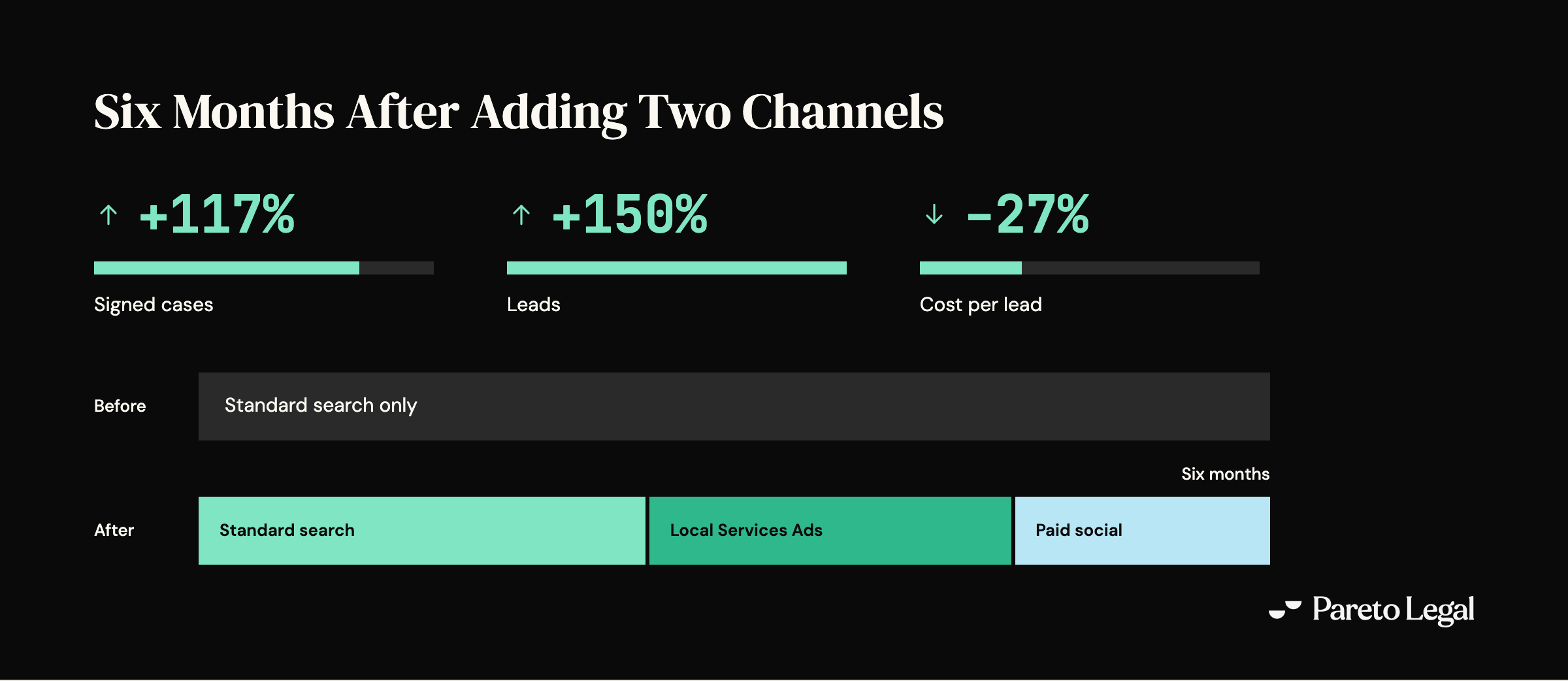
One Baltimore injury firm we work with had its entire budget in standard search. We added local services ads that charge per lead and paid social, and the firm signed 117% more cases in six months, with 150% more leads and cost per lead down 27%.
3. Meta Ads
Meta reaches people before the accident and again after they have already visited your site, because nobody scrolls Instagram looking for an injury lawyer.
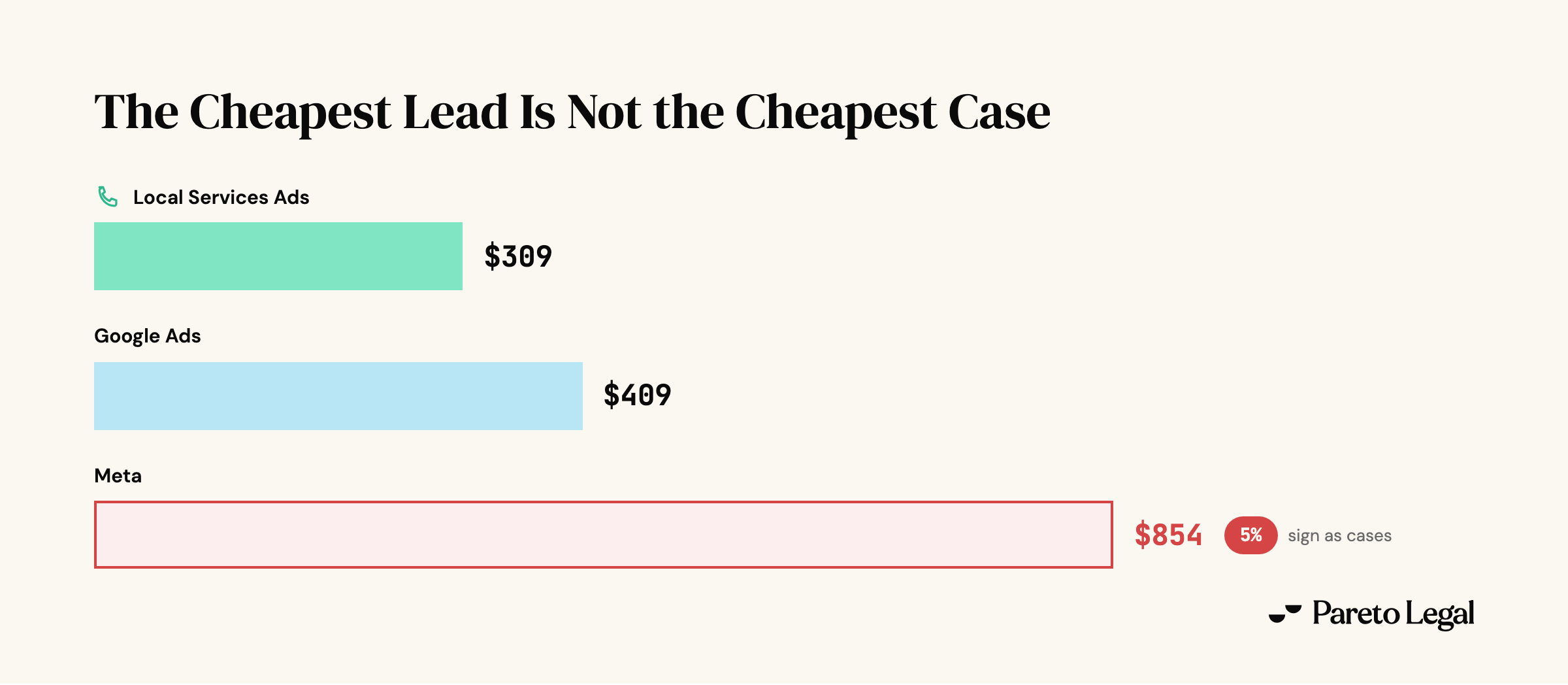
Injury cost per lead runs around $854 on Meta with basic remarketing in place, against about $409 on Google Ads and $309 on Local Services Ads. The lead-to-case rate on Meta specifically sits closer to 5%, so it earns its place as a layer on top of search rather than a replacement for it.
If meta ads for personal injury lawyers is where you want to start, read that first, and I compare the two platforms properly in google ads versus facebook ads.
4. YouTube Ads
YouTube is the awareness buy with the sharpest targeting, because it inherits Google’s audience data instead of guessing. You reach people who have been researching accidents, injuries and attorneys elsewhere.
Judge it on assisted signed cases and branded search lift, never on views. youtube ads for lawyers belong in the top-of-funnel allocation, which means they get funded after search is profitable.
5. Microsoft Ads
Microsoft Ads deliver a fraction of Google’s volume at a lower cost per click, with an older and often wealthier search audience. Worth a small line item once your search engine marketing on Google is consistently profitable, not before.
6. Programmatic and OTT Advertising
Connected TV and programmatic buy the reach that television used to sell, except aimed at a defined local audience and tied back to a signed case. This is the fastest-growing part of what we run.
You are not buying awareness in general. You are buying frequency against people who already look like your case type in your county. Our programmatic and ott advertising for law firms sits in the same top-of-funnel band as YouTube.
7. Geofencing
Geofencing draws a boundary around hospitals, urgent cares, body shops and courthouses, then serves ads to the devices that entered it.
It works as a supporting layer with realistic expectations about volume, and it needs care around how you talk to someone who was just in an accident. geofencing the local addresses your cases come from is a tactic, not a channel strategy.
8. Retargeting
The 30 to 180 day retargeting window is usually the lowest cost per case in the entire account, because you are paying to finish a conversation your other channels already started.
Injury decisions are rarely made in one session. Someone reads three firms’ pages, talks to family, waits for a call back from an adjuster, and then hires. retargeting the people who already visited is how you stay top of mind through that.
9. Traditional Advertising
The oldest ways to advertise your law firm, billboards, television and radio, buy reach and name recognition, and at real scale they work. What they do not buy is knowing which spot produced which case.
That trade is why budget keeps moving from broadcast into connected TV, where the same reach comes with attribution attached. The legal marketing statistics we track put the traditional share in context.
10. TikTok Ads
We run TikTok as a paid direct-response channel, tested small, judged on the same cost per signed case as everything else. Creative burns out faster here than anywhere else, so plan on replacing it monthly.
It sits alongside Meta inside our paid social for law firms work.
Intake Optimization for Personal Injury Firms
Intake optimization is three jobs: answer fast, track every lead through to a signed case, and follow up automatically for weeks after the first contact. Fixing those often produces more signed cases than adding budget does.
Marketing generates leads and intake converts them into cases, and they are one system rather than two departments. A digital advertising agency has no obvious business auditing your phone lines. We do it anyway, and I do not know another agency that treats it this way.
11. Speed to Lead and Call Handling
Answer rate decides which firm a potential client actually reaches, because personal injury clients rarely retain anyone on the first call and most compare two or three firms first.
I have seen injury firms spend five figures a month on ads while losing the majority of those leads to slow response times and broken follow-up.
Google listens to Local Services Ads calls and adjusts how often it serves you, so an answering service should catch anything the in-house team cannot after two or three rings. Then listen to the recordings yourself, because the legal client intake statistics on how few firms answer the phone are worse than most partners expect.
12. CRM and Signed-Case Tracking
One click ID has to survive from the ad through the form or call, into the CRM, and back out to the platform as an offline conversion when the case signs. Without that you optimize toward leads and hope.
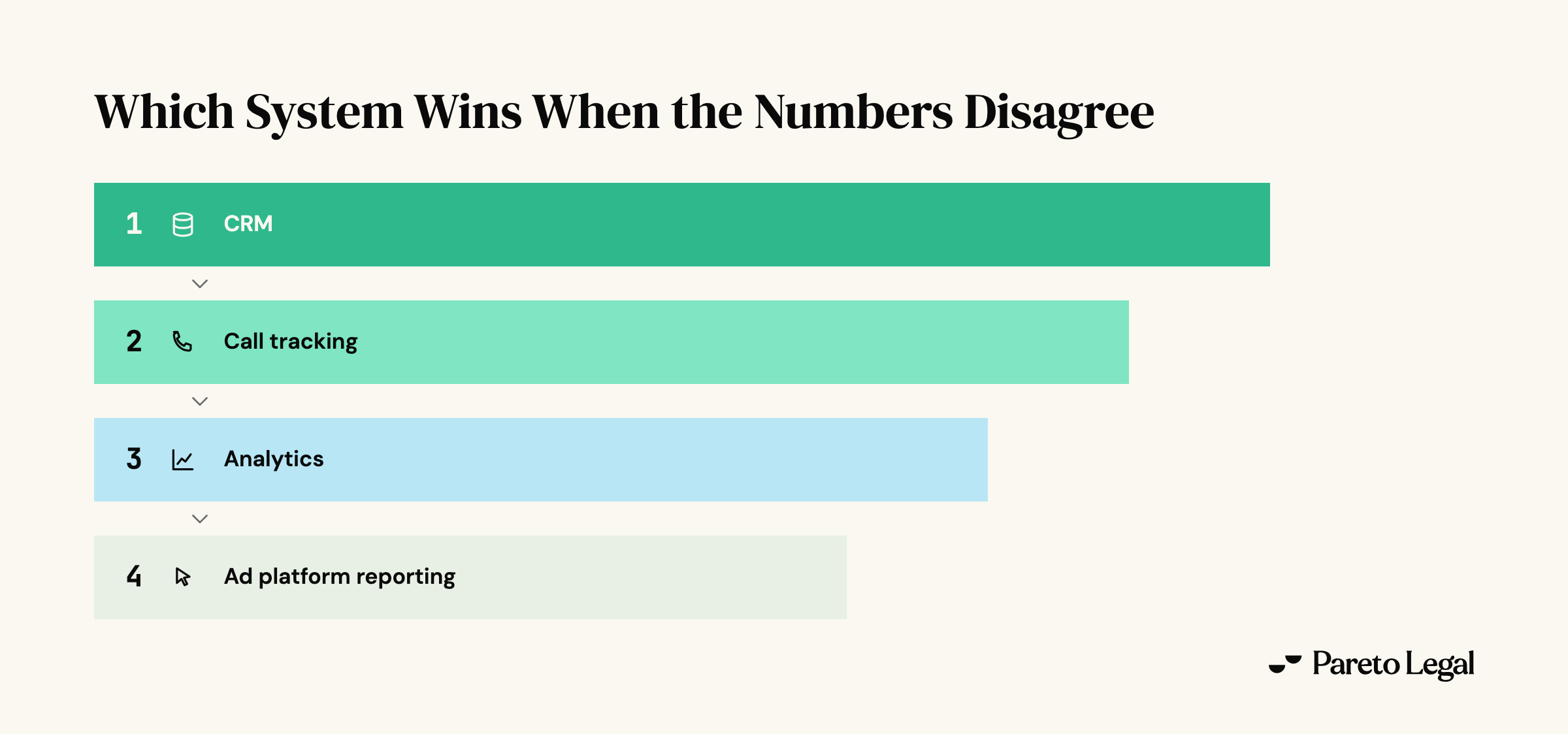
When the systems disagree, the CRM wins, then call tracking, then analytics, then the platform’s own reporting. Getting tracking that survives from click to signed case is the unglamorous work that makes every other number here trustworthy.
13. Follow-Up and Email Marketing
Most injury leads that do not sign are unfinished rather than lost. Email marketing is the cheapest way to finish those conversations, and a sequence that keeps showing up for sixty days costs almost nothing against a lead you already paid several hundred dollars for.
Build it so it fires automatically. Anything that depends on a paralegal remembering to send an email will stop happening the first busy week.
Local Visibility for Personal Injury Law Firms
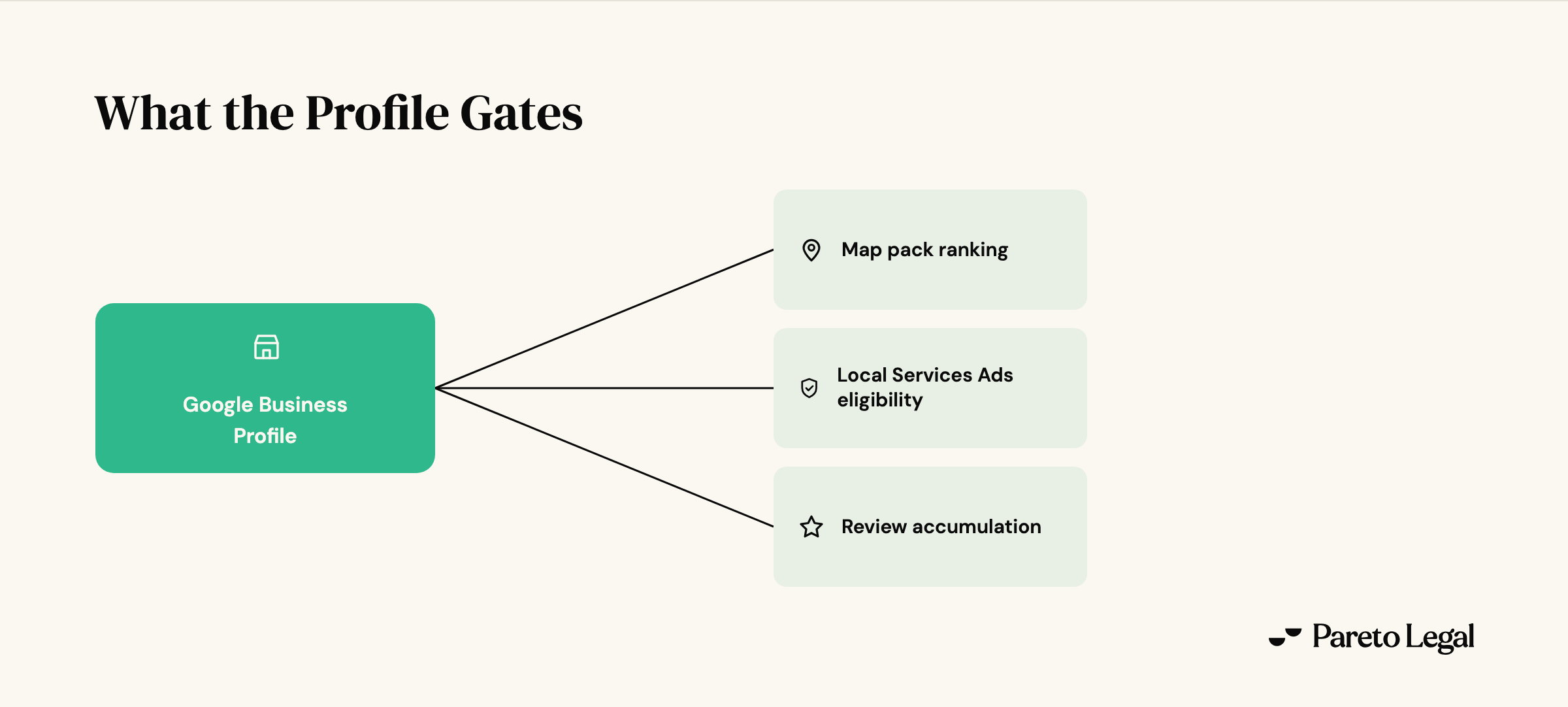
Local visibility is four things in this order: your Google Business Profile, your reviews, your local search presence, and the pages the clicks land on. The profile comes first because it gates the other three.
14. Google Business Profile
Your Google Business Profile determines map pack visibility, feeds Local Services Ads eligibility, and is where your reviews accumulate, so a thin profile quietly caps three other tactics at once.
Complete every field, pick categories precisely, add real photos of the actual office, and keep hours accurate. It is the cheapest item on this list and the first thing I would fix.
15. Reviews and Reputation
Reviews are the organic tactic with the most direct effect on your paid costs, because they build trust before anyone calls and because review count, velocity and recency all feed local service ads eligibility and ranking. They show up in your cost per case whether you track them or not.
Track collected reviews weekly rather than monthly, since Google rewards a steady stream. One to five new reviews a week is a real target, asked for at case resolution when the client is happiest.
Someone at the firm needs to own that number. This is one function I would not outsource, and in 2026 the shortcut vendors are a liability rather than a shortcut.
16. Local SEO and the Map Pack
Local SEO is city and practice-area pages, consistent listings across the directories, and proximity you cannot change. Your online presence has to say the same thing everywhere, because inconsistent listings suppress you in local search results.
Paid legal directories belong here as citation sources, not as a lead channel. The local ppc statistics we publish cover how local search behaves now.
17. Website and Landing Pages
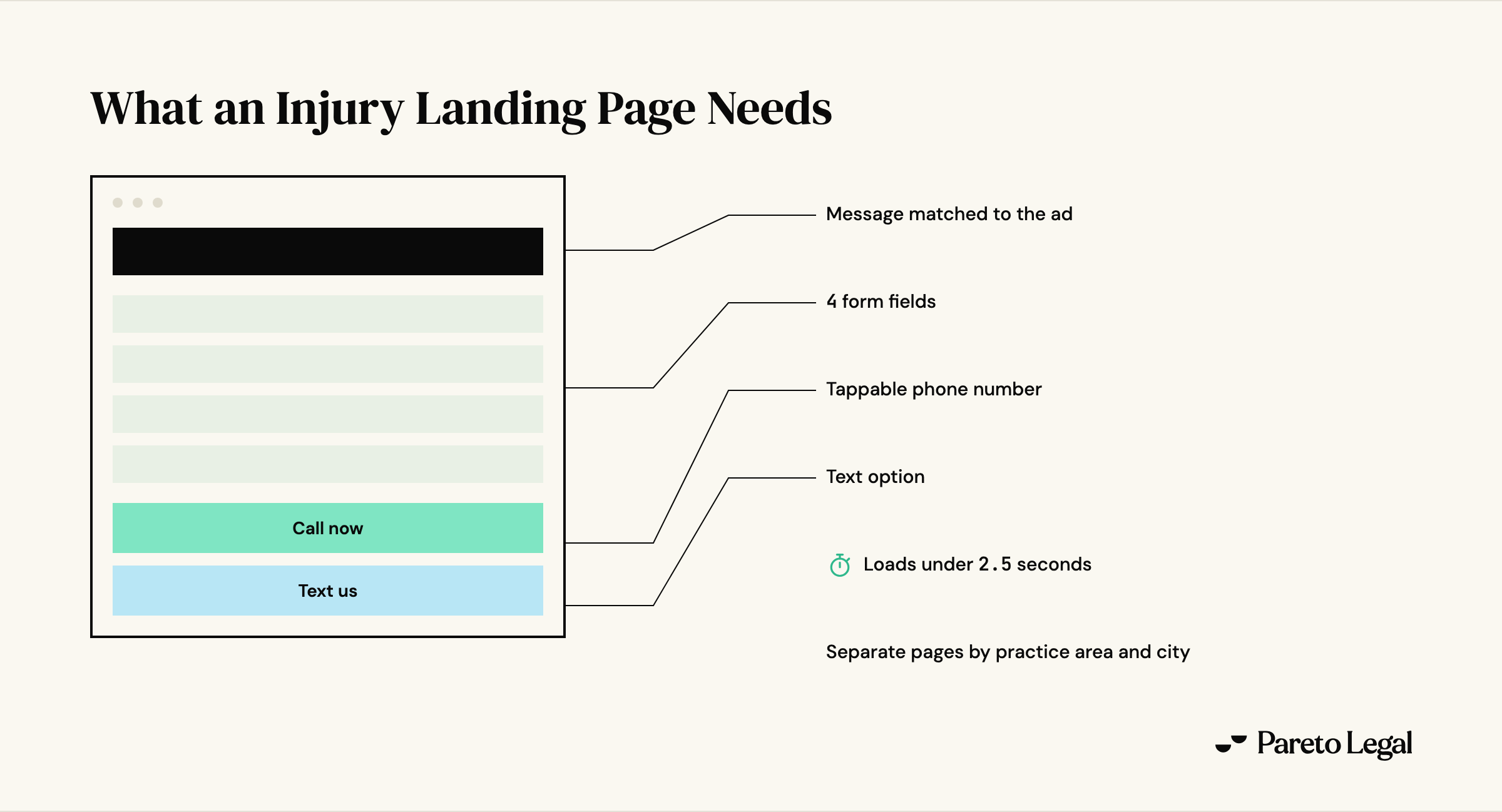
Your law firm website is where content, social and search all fail if it is bad, which is why it sits with the local work rather than after it. One page, one goal, message matched to the ad that sent the click.
Four form fields, a phone number that is tappable, a text option, and a load under two and a half seconds.
Separate pages by practice area and by geography, because a car accident page in Baltimore should not be the same page as a truck accident page in Orlando. That is how our injury ppc program is built.
SEO and Content for Personal Injury Lawyers
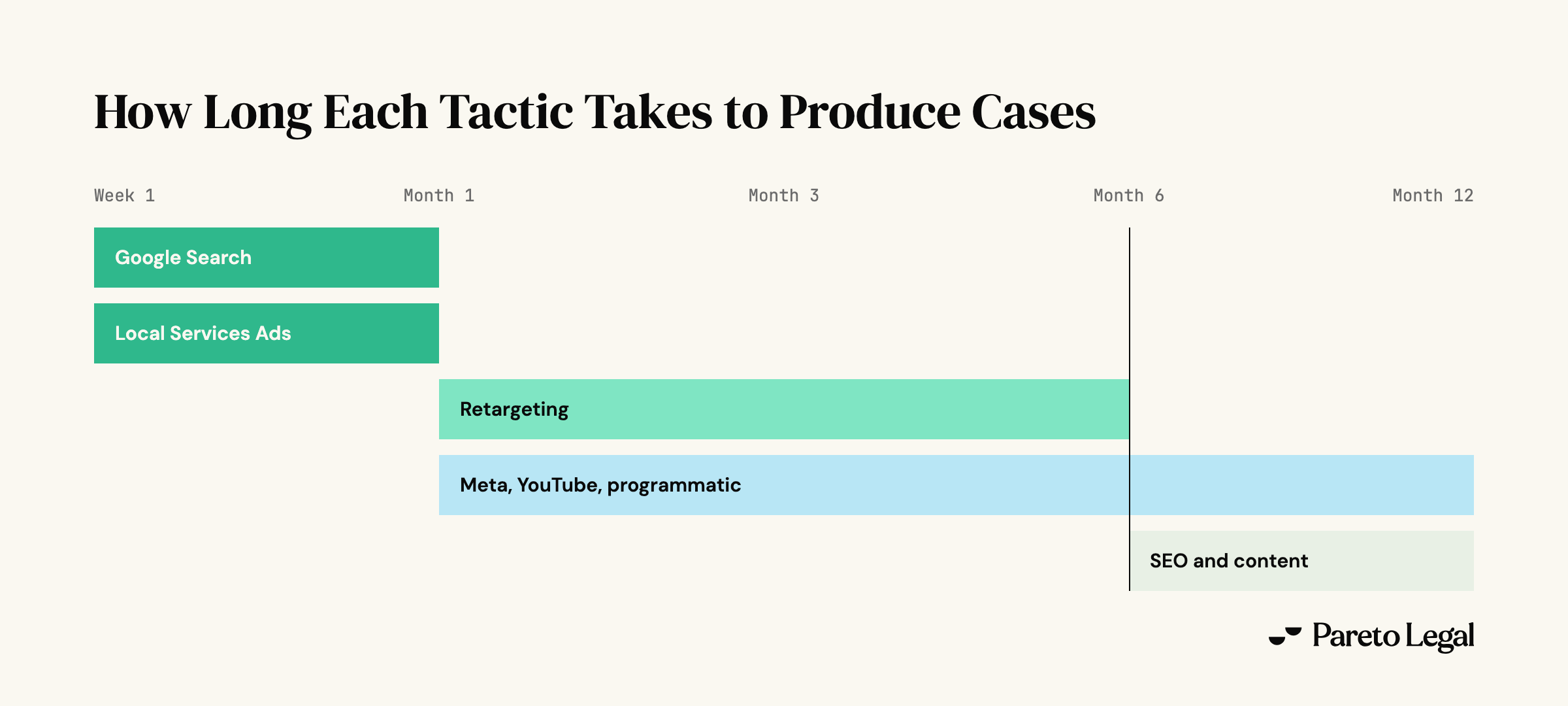
SEO and content take six to twelve months to produce meaningful movement in a competitive injury market, which is why they sit here rather than at the top of the list. The paid channels above can produce signed injury cases inside the first month.
18. AI Search Visibility
A real share of injury research now begins inside an AI answer rather than a results page. Someone asks what to do after a rear-end collision, gets a synthesized answer, and the follow-up question is where a firm either appears or does not.
The mechanics are different from SEO ranking. There is no position ten to climb from, because the answer either cites you or it does not.
What feeds those citations looks familiar: clear answers to real questions, a complete and consistent business profile, review volume, and being mentioned on the sources the models already read. The shift shows up in where legal marketing spend is going.
It is early, and anyone selling you a guaranteed process for it is ahead of the evidence. Buying placement inside those answers is a separate question, and OpenAI still does not permit chatgpt ads for lawyers outside a manual approval.
19. Search Engine Optimization
Personal injury lawyer SEO builds visibility you do not rent, and it is how a large share of personal injury law firms reached eight figures in the first place, alongside referrals and reputation.
The timeline is the thing to be honest about: six to twelve months before meaningful movement in a competitive injury market, longer if your site is new or thin. What you gain is durability, since the traffic does not stop the day you pause a budget.
The tradeoff is responsiveness. You cannot change an organic keyword strategy month to month the way you can move a paid budget between case types and cities, and Google keeps monetizing more of the search results page above the organic listings.
20. Content Marketing
Content marketing earns its place in an advertising program for two reasons that have nothing to do with SEO rankings. It answers what your intake team gets asked anyway, and it builds the retargeting audience at a fraction of the click price.
Write the pages that map to real case types and real questions after an accident. Then retarget the people who read them.
Brand and Referral Tactics for Personal Injury Firms
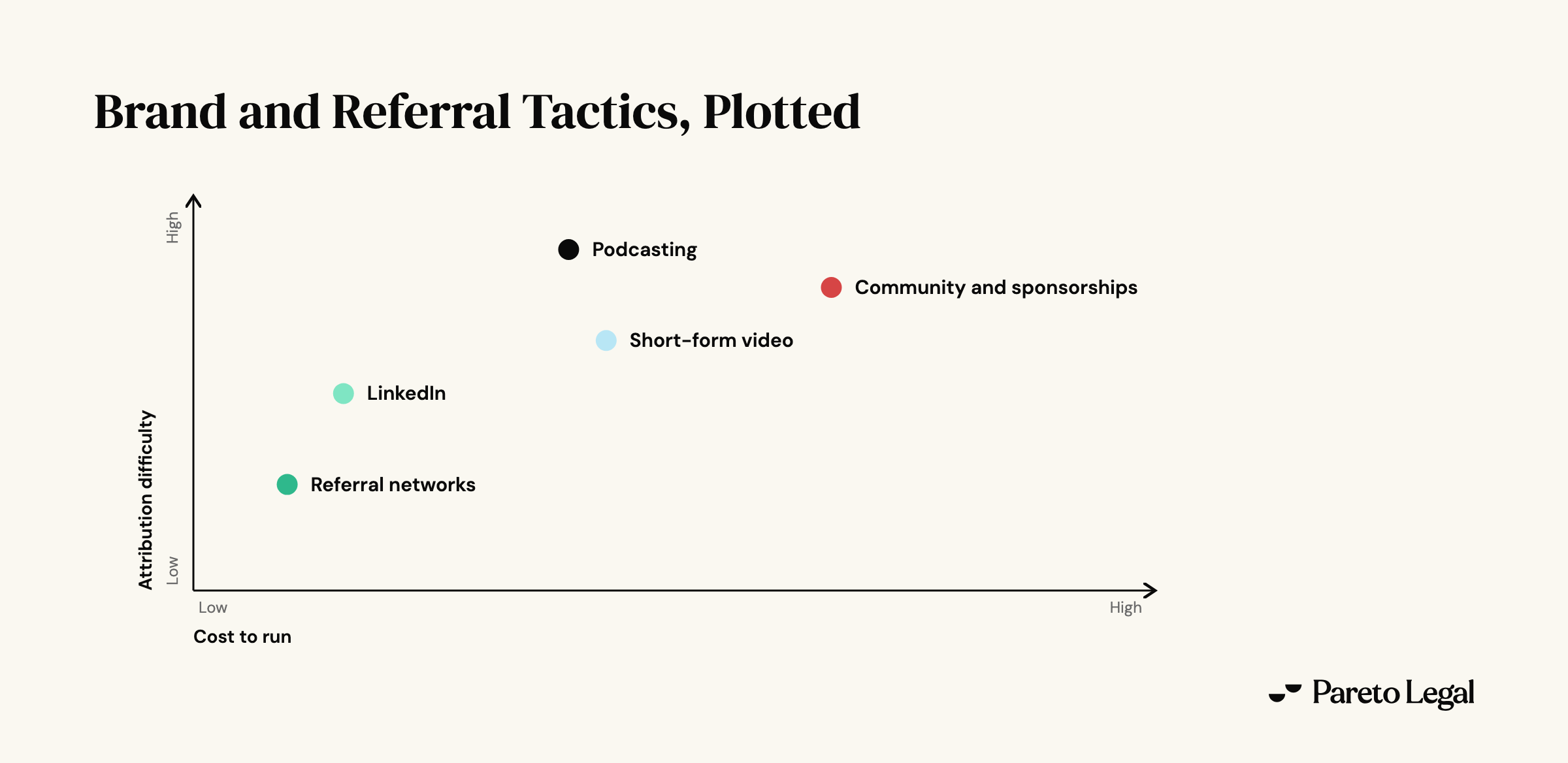
These five tactics are how most injury firms reached $10 million, and each one gets a single operational ask that makes it measurable. They are also the hardest to attribute, which is the reason none of them should be funded out of the paid budget.
21. Referral Networks
Attorney referrals and past clients are usually a firm’s lowest acquisition cost and its least measured source, and that combination is why the number rarely gets managed.
Track referral attribution like a campaign. Ask every intake what made them call today, record the answer in a required field, and you will find out which relationships are actually producing cases. It is one of the growth levers that compound.
22. LinkedIn
LinkedIn is the strongest organic channel for the referral side of an injury practice, because that is where the personal injury lawyers who refer cases are.
Post consistently as the attorney rather than as the firm logo, and engage with peers rather than broadcasting at them, because that is how you build trust with the lawyers who refer cases. Social media marketing pays off here only when it ties back to a signed case.
23. Short-Form Video
Instagram Reels, YouTube Shorts and organic TikTok all run on one asset: an attorney who will show up on camera and explain something useful in forty seconds.
Film several in a single sitting, cut the video content for each platform, and judge the video marketing on branded search lift rather than views.
24. Podcasting
Guest appearances on existing injury and legal-profession shows are the efficient version of podcasting. You borrow an audience instead of building one, and the recordings become short-form clips.
Attribution is genuinely poor, so treat it as authority work rather than a lead channel.
25. Community, Sponsorships and Speaking
Local sponsorships, bar association talks and community events are slow and hard to attribute, and worth doing where a partner already enjoys the work. Where they pay off is name recognition in the county your cases come from.
Common Personal Injury Marketing Mistakes
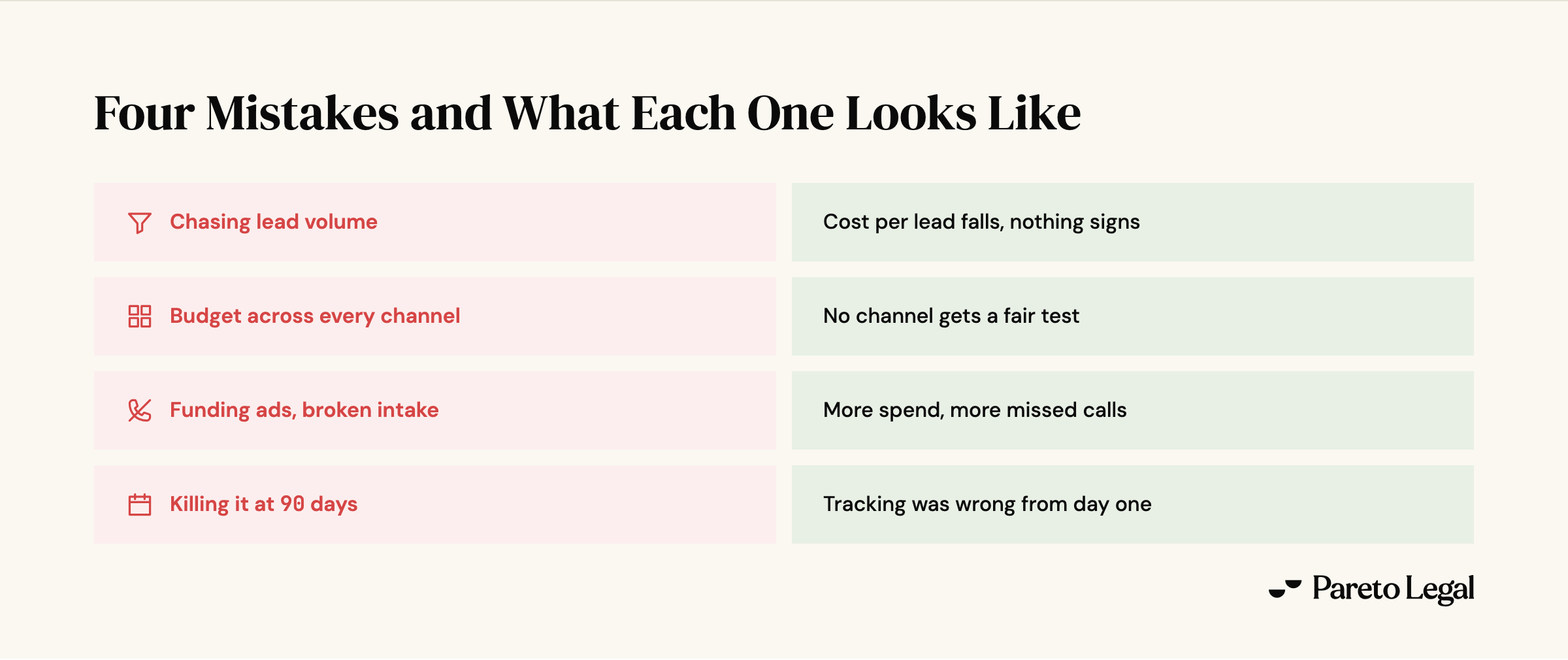
The four personal injury lawyer marketing mistakes below cost firms the most money: chasing lead volume instead of signed cases, spreading budget across every channel at once, funding ads while intake stays broken, and killing a campaign at ninety days.
Why More Leads Isn’t the Goal
More leads is not the goal, because lead volume, cost per lead and click-through rate can all improve in a month where nothing signs. It is also the easiest number for a legal marketing company to move, which is why it keeps getting sold. Pick the metric first, then pick the channels.
Shared-lead vendors and paid legal directories look cheap on a cost-per-lead basis and are usually the most expensive way to sign a case, because you are racing three competitors to the phone on a lead all of you already paid for. What lead generation for lawyers actually costs is only half the question.
Budget Spread Too Thin Across Channels
Launching search, Local Services Ads, Meta, TikTok, YouTube, an SEO program and a website rebuild in the same quarter spreads your marketing efforts so thin that no single marketing campaign gets a fair test, and leaves attribution nobody can untangle.
Fund the bottom of the funnel until search is profitable. Then layer.
Starving Intake While Funding Ads
Adding budget on top of a broken phone system buys you more missed calls. Bad intake kills more advertising budget than bad targeting does, and it has almost nothing to do with the ad account.
Judging a Campaign in Ninety Days
Firms launch, run three months, see a loss, and shut it down. Frequently the tracking was wrong from day one or the data is being read incorrectly, so the account gets killed for a problem nobody diagnosed. The way I sequence injury budgets assumes a longer read than one quarter.
Personal Injury Advertising Rules to Know
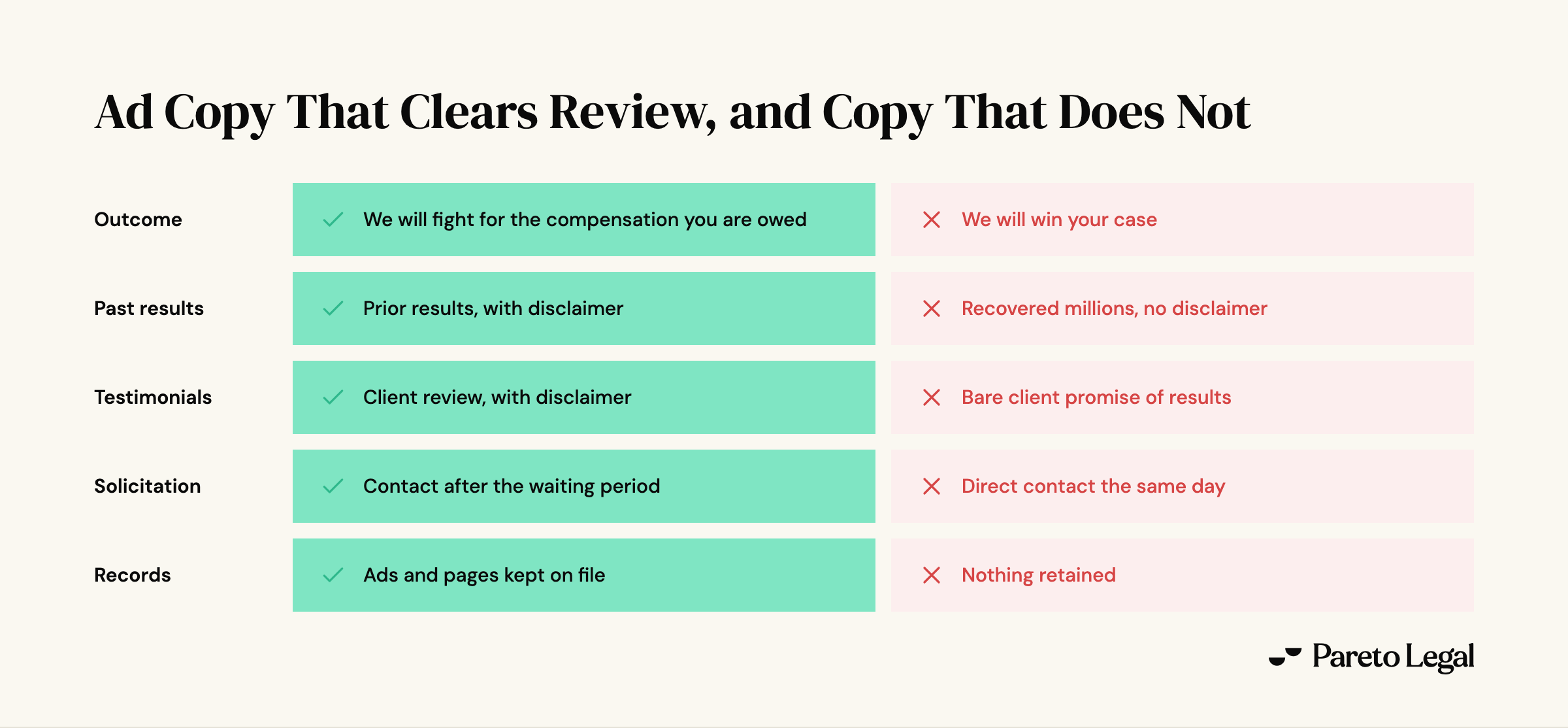
Personal injury advertising rules come from your state bar, and the consistent ones are these. Do not promise or imply a specific outcome. Disclaim past results and testimonials.
Respect the waiting period some states impose on direct solicitation after an accident, and keep copies of your ads and landing pages for the retention period your bar requires.
Rules vary enough between jurisdictions that your own bar authority governs anything above, so read yours before you write copy.
Practically, the rules shape personal injury lawyer advertising copy more than they shape strategy. Superlatives and settlement figures in headlines are where firms get into trouble, and the same review applies to your paid search campaigns as to a billboard.
Frequently Asked Questions
How should a personal injury law firm market itself?
Fund the channels that reach potential clients already looking for a personal injury attorney, then layer awareness on top.
That means high-intent Google search and Local Services Ads first, intake fixed so those leads convert, local visibility and reviews maintained continuously, and Meta, YouTube and programmatic added once the core search program is profitable. The sequence matters more than the list of personal injury marketing ideas you start from.
What are the four pillars of personal injury marketing?
There is no standard four in marketing for personal injury attorneys. When we evaluate a personal injury law firm’s program we use five: strategy, execution, intake, attribution and reputation. Most firms are strong on execution and weak on the other four, which is why their reporting looks busy while their case volume does not move.
Is PPC or SEO better for personal injury lawyers?
They answer different questions. Paid search puts you in front of potential clients this week and lets you move budget between case types and cities month to month, while SEO for personal injury lawyers takes six to twelve months and then holds.
Should an injury firm run Google Ads, Meta, or both?
Google first, always, because it captures existing demand. Meta earns its place once search is profitable, as an awareness and retargeting layer at a higher cost per lead and a lower lead-to-case rate.
Which one deserves the next dollar depends entirely on whether your bottom of funnel is fully funded, which is the whole basis on which I weigh google ads against facebook ads.
Does a personal injury firm need advertising if referrals already work?
Referrals, reputation and organic search are genuinely how most plaintiff firms reach eight figures, and they keep working after that. What they cannot do is let you decide which practice areas and which cities you show up in next month, which is what taking share requires.
Everything above assumes a plaintiff-side firm at roughly $10 million in revenue and up. Below that line the honest answer is usually to fix intake and positioning before buying more clicks.
What is the 80/20 rule for lawyers in marketing?
About 20% of your keywords, campaigns and referral sources produce roughly 80% of your new clients. The other 80% quietly drains the budget. The work is identifying your 20% early, funding it properly, and cutting the rest without sentiment.
Marketing for lawyers rewards the channel you can actually track. If you are spending real money on injury advertising and cannot say which campaigns produced signed cases last quarter, that is a solvable problem.
We evaluate personal injury law firm marketing across strategy, execution, intake, attribution and reputation, and tell you which changes will move signed case volume.
Book a strategy call and we will look at your numbers.